
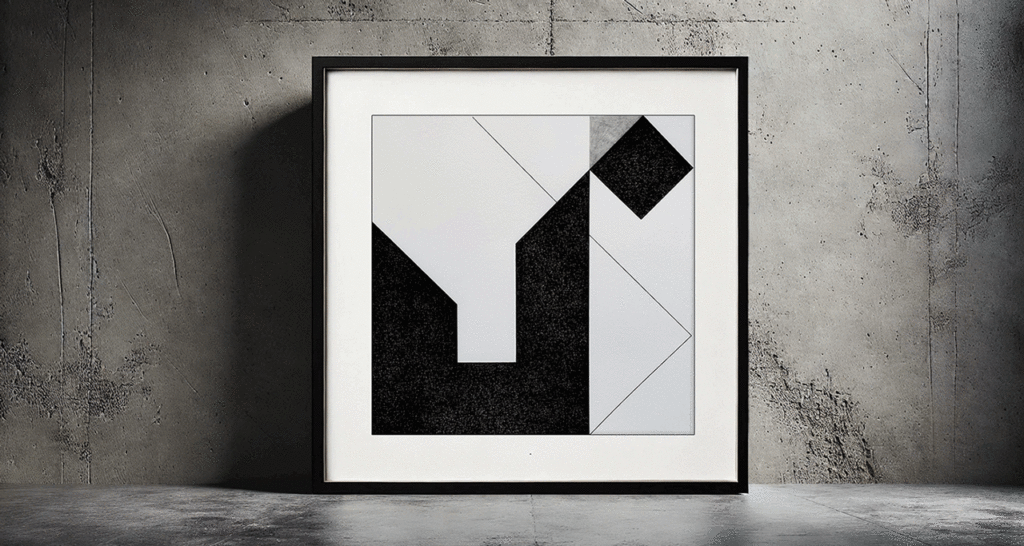
Josef Haring
With TAP, Josef Haring carries out a systematic exploration of surface and its limits. His visual language is dry and precise, stripped of narrative, free of color-driven appeal. Within the ■ 30.5 ■ project, he sees constraint as a source of momentum: fixed dimensions, a reduced palette, and formal discipline. Like his work, this exchange is stripped to the bone. It’s about tension, focus, and what survives once everything unnecessary is removed.
⚫⚫⚫
What does “TAP” stand for?
It’s my shorthand for Temporary Art Project.
When you begin a new series, do you start from a clear image or from a system you want to explore?
Yes—and it quickly becomes an exploration.
Is starting easy for you?
I’m not sure it’s easy. It just comes as naturally as breathing.
If a piece gets away from you, do you keep it?
Yes—to observe my own stupidity.
What makes a real-world detail worth turning into a painting?
There’s no such thing as an ordinary detail. Every single one is extraordinary.
Tap – Josef Haring
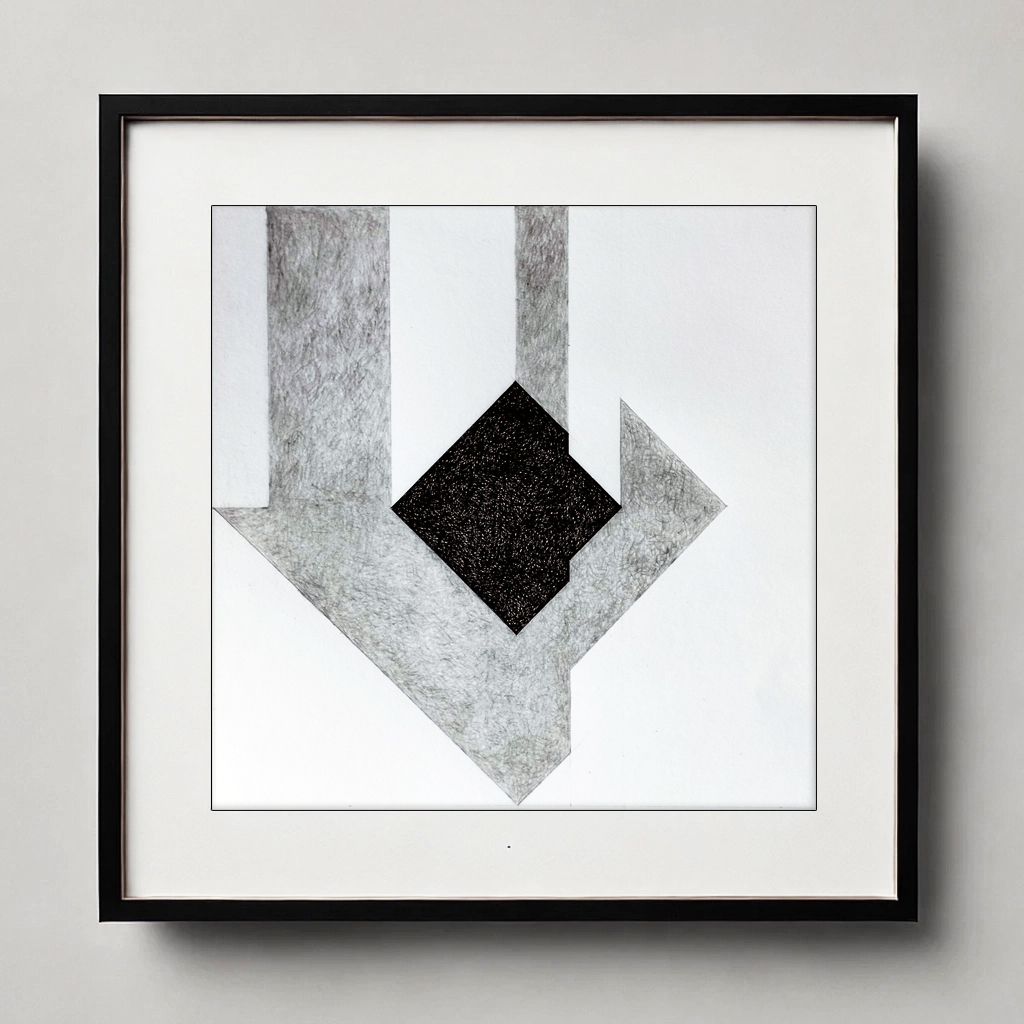
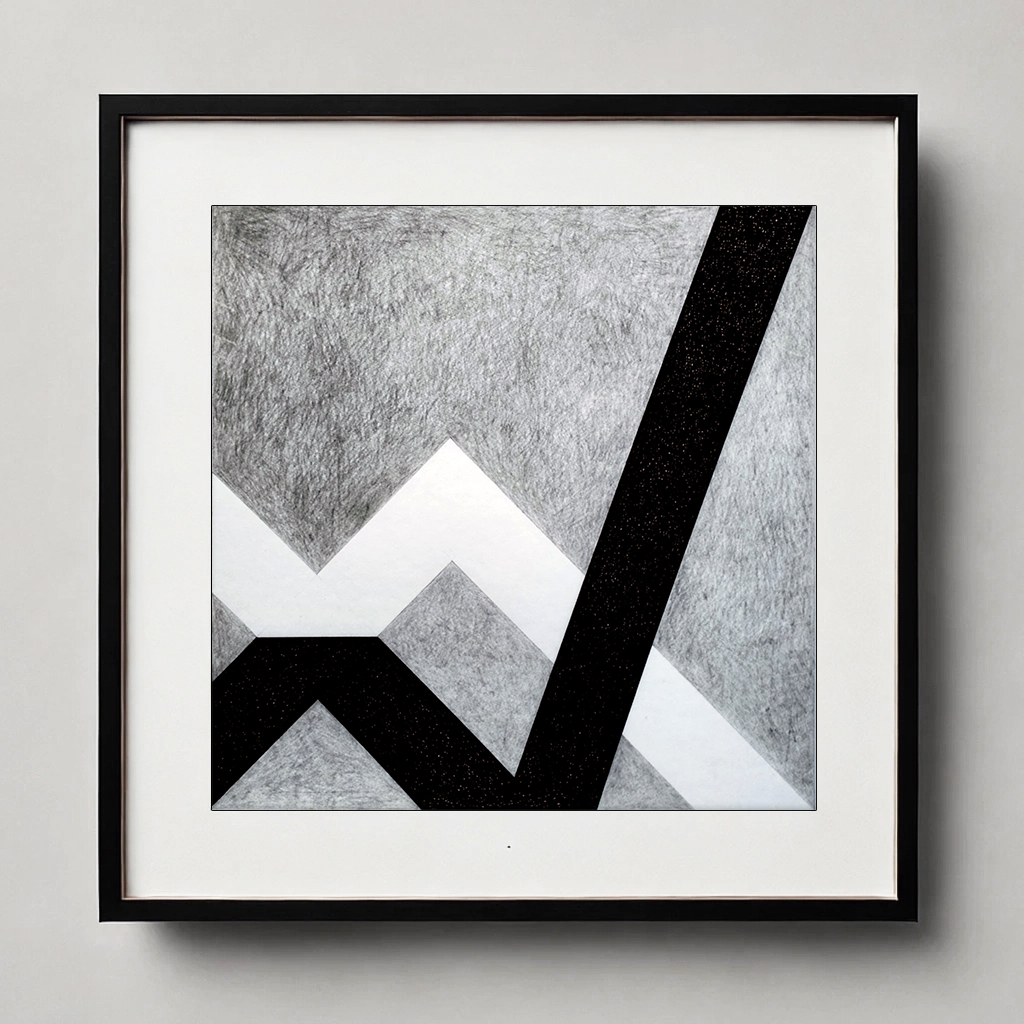
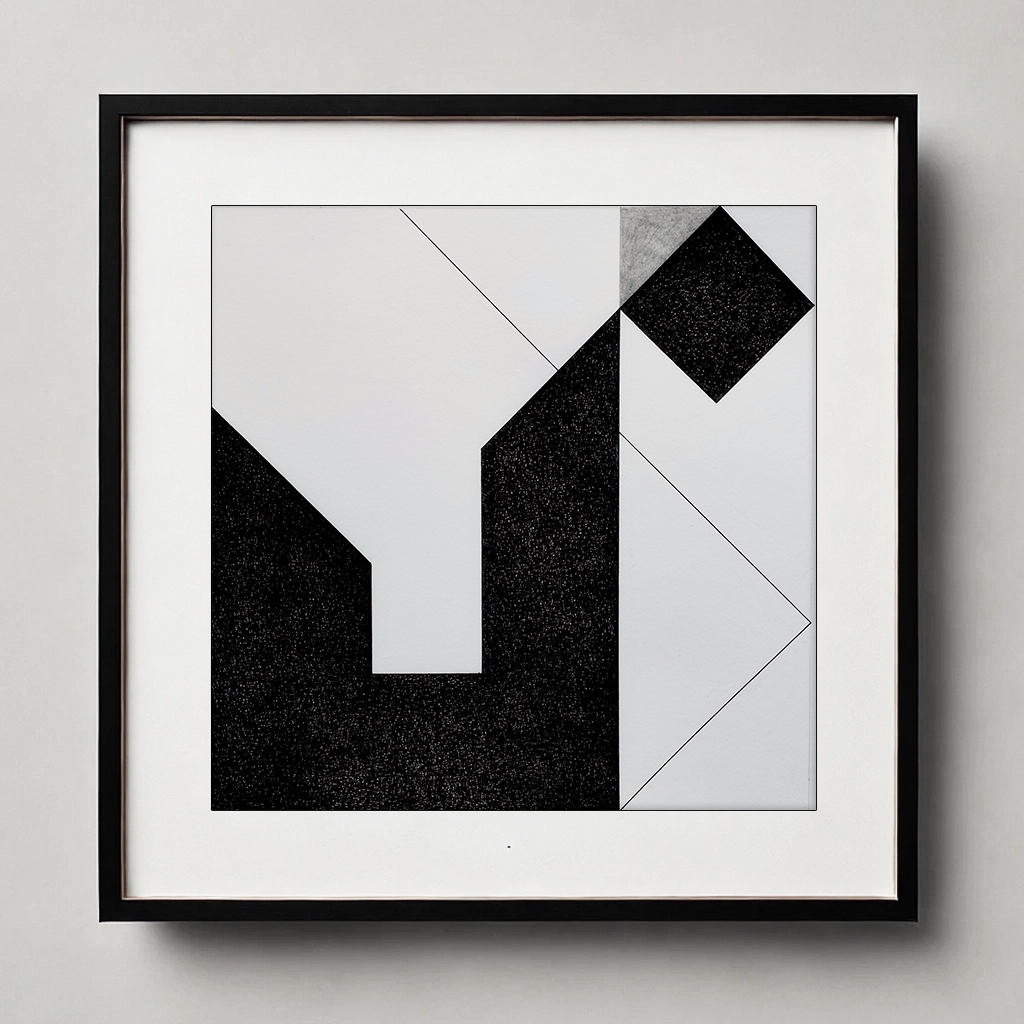
In TAP, each form is born from a fragment torn from reality and reduced to its essence.
Josef Haring composes contained abstractions, where all excess is eliminated.
What’s your latest formal fixation?
Tension.
How would you describe your artistic environment in today’s world?
A kind of drifting through a geometric landscape.
Do you want your work to remain strictly visual?
Yes—entirely visual.
What frustrates you about abstraction?
What really gets me thinking is the general lack of respect in society.
Are there artists you go back to often?
Paul Klee, Josef Šíma.
If you didn’t have art, what would you be doing?
It’s not me who has art—art has me.
Tap – Josef Haring
In TAP, each form is born from a fragment torn from reality and reduced to its essence.
Josef Haring composes contained abstractions, where all excess is eliminated.