
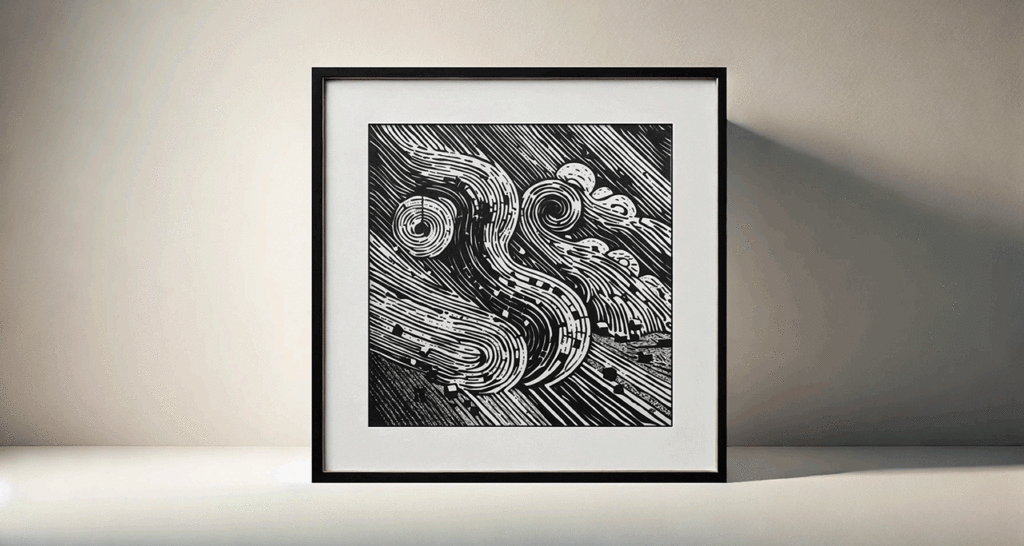
Osbern d’Orvaux
For Osbern d’Orvaux, everything starts with the line, precise, dense, sometimes on the verge of collapse. With brush, marker, or Rotring, he traces unstable networks suspended between graphic tension and potential erasure. Trained in logic, he now works within uncertainty, where an obsession with structure begins to mutate.
With Analog Chrysalid, created for ■ 30.5 ■, he explores that ambiguous zone where every line seems to carry its own glitch.
A fragmented interview, a series of mental scans. No instructions provided.
⚫⚫⚫
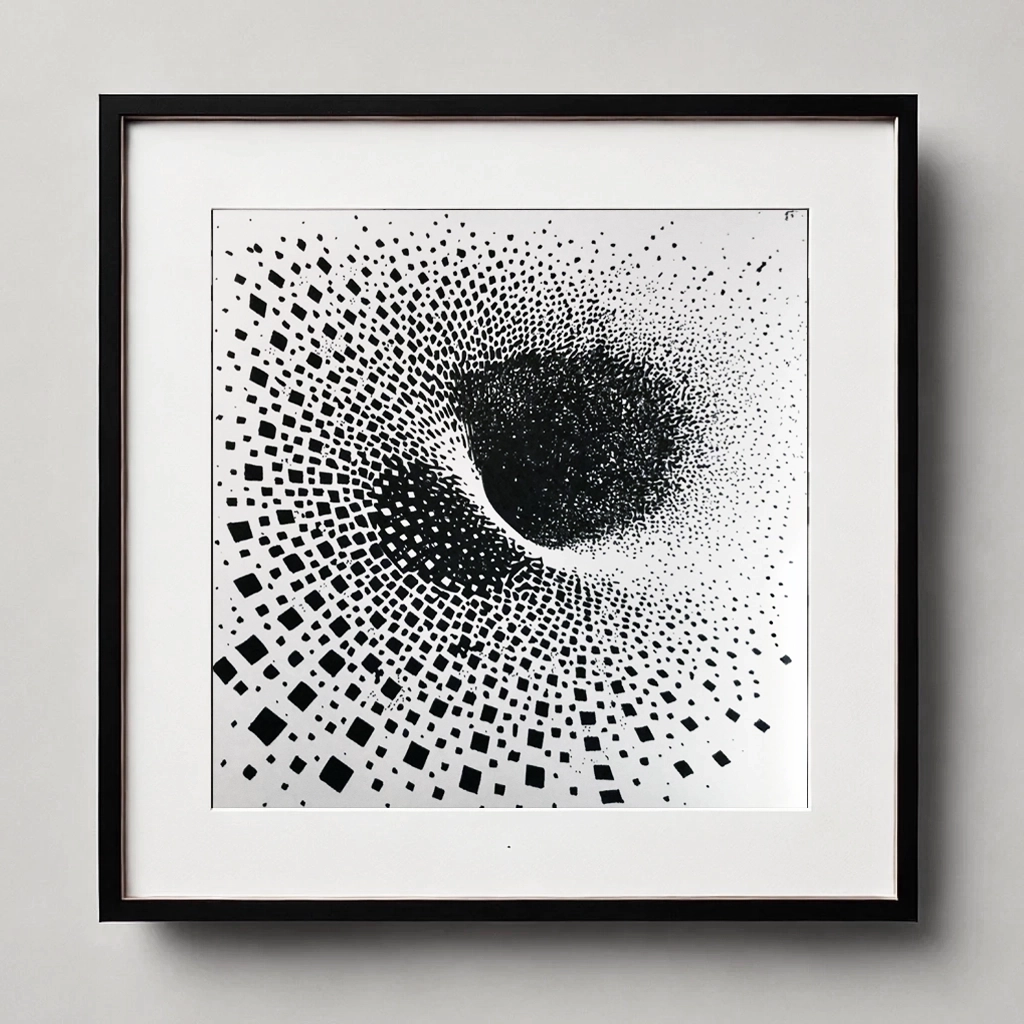
[02:34] You often talk about the binary and the organic. Aren’t they opposites?
Not really. Push a binary system far enough and it starts producing ambiguity. What we call “organic” is often the result of unstable computations.
[02:36] You treat the Rotring almost like a sacred object. Why?
High pressure = overload.
Low pressure = absence.
The right flow is rare — and that makes it valuable.
(And it’s quieter than a keyboard.)
[02:38] Why Analog Chrysalid? Sounds like a post-punk insect.
A chrysalid is structured compression before emergence.
Analog suggests blur, instability.
Together, they define an uncertain form.
The insect metaphor works.
[02:42] You mention the Amstrad CPC 6128 and the Atari 520 STE. Is that nostalgia?
Not at all. Just efficient formats.
64K is enough to build a world.
Now I do the same — with a sheet of paper.
[02:45] Your work — circuit diagrams or star maps?
They’re attempts to visualize the logic behind code.
Mental maps of algorithms in motion.
Visual translations of digital systems at work.
Série n°01 : Chrysalde Analogique
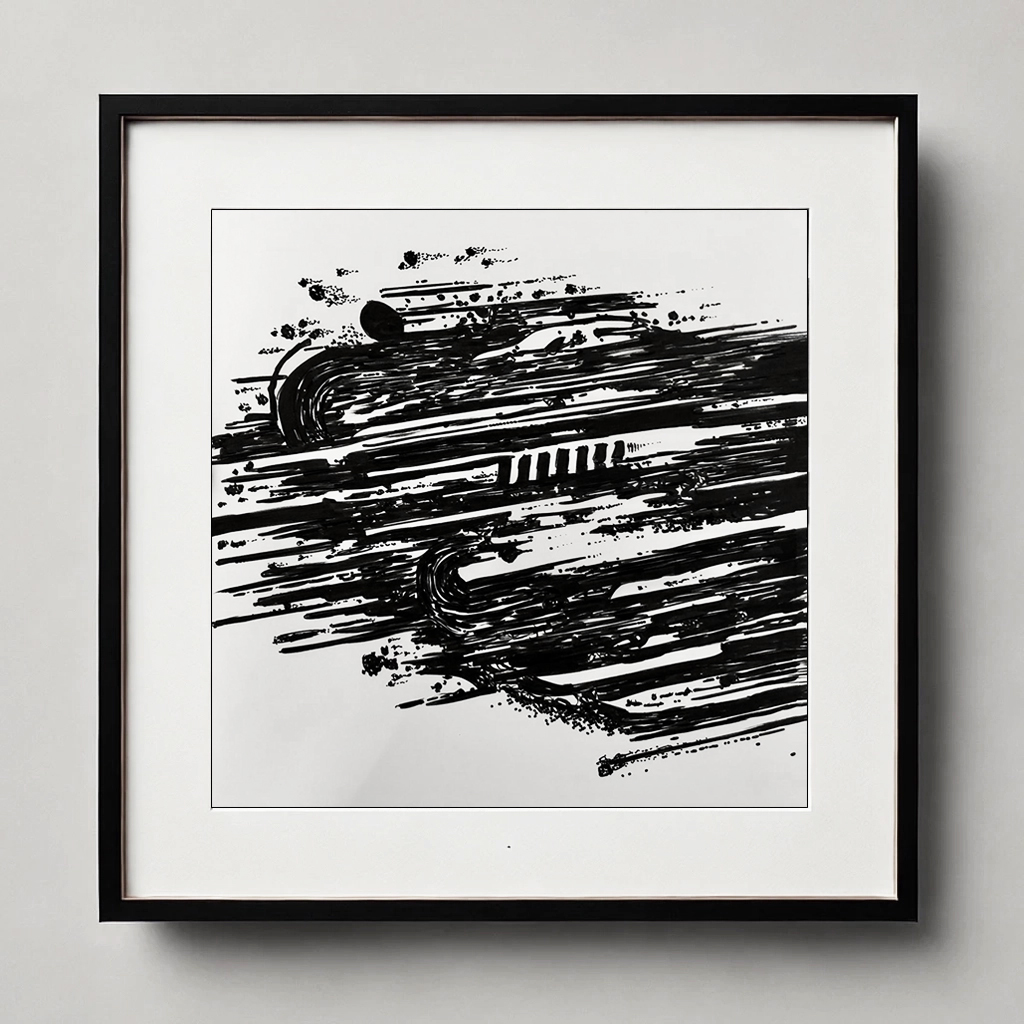
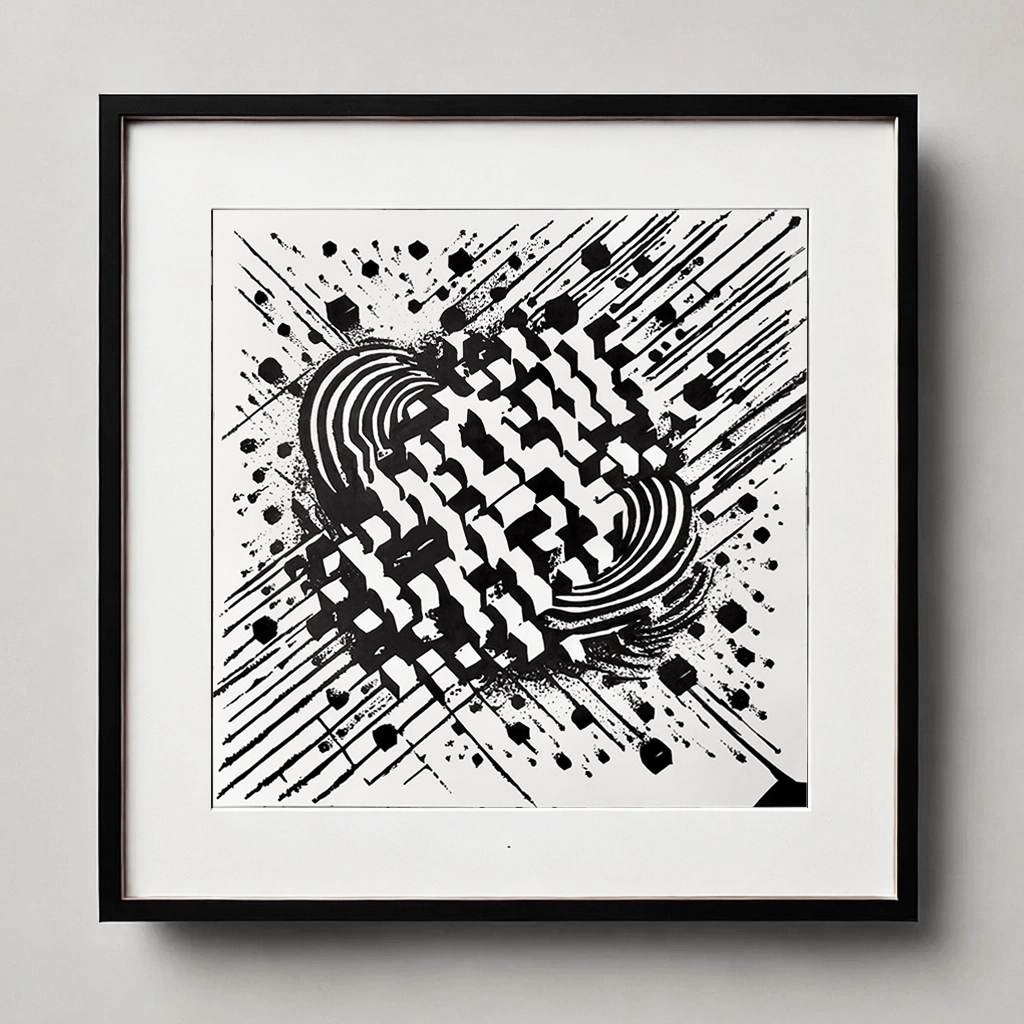
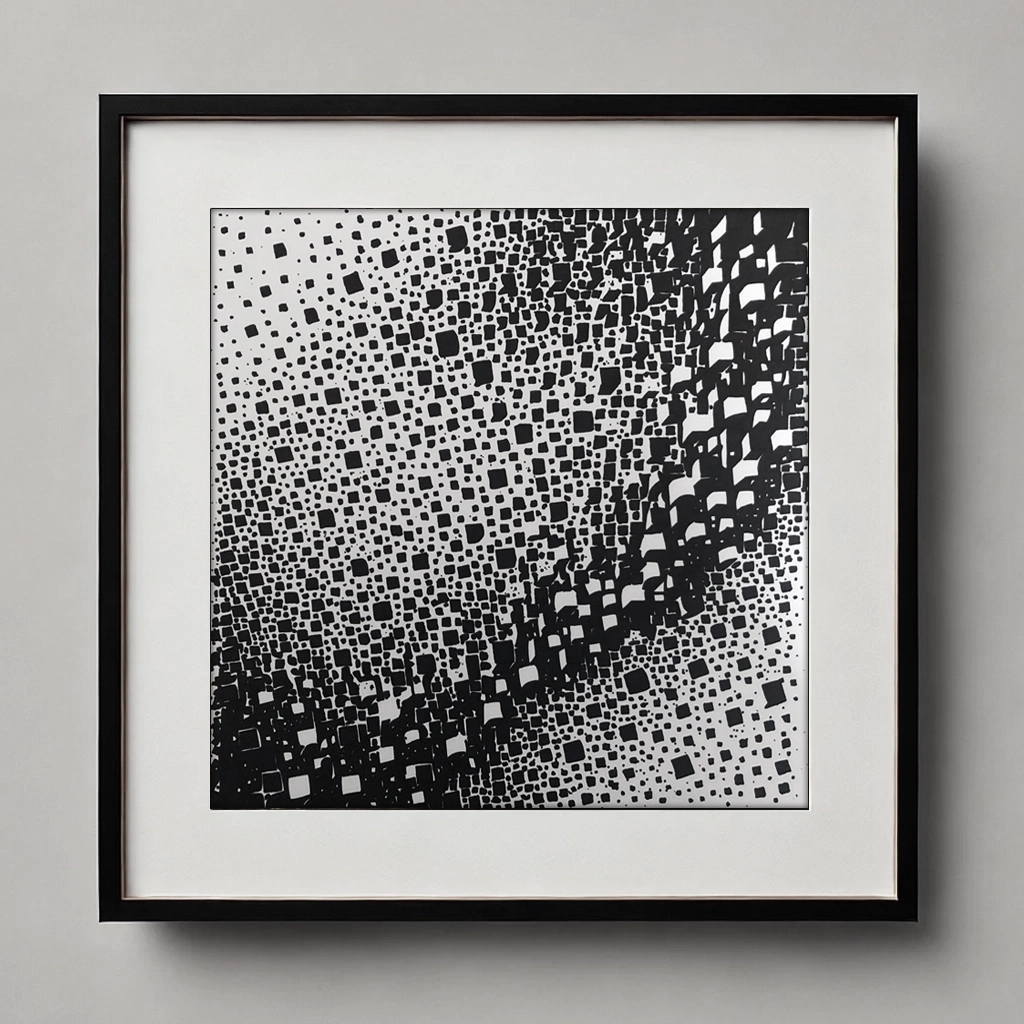
Analog Chrysalis captures the moment when the algorithmic structure begins to crack. Each line becomes a fragment of hybrid language, between machine memory and instinctive gesture.
[02:49] Do you plan your drawings or let your hand drift?
I plan, then disrupt.
The bug is built into the protocol.
It’s not a mistake — it’s a function.
[02:51] You often talk about mutation. Is it evolution? Drift? Contamination?
Cross-contamination.
My tools change me as much as I change the surface.
Eventually, I no longer know who’s in control.
[02:53] That feedback loop — are you trying to lose yourself in the process?
Not trying to, but I don’t resist it.
The tool acts on me as much as I act on it.
It’s a continuous interaction. A co-evolution.
Série n°02 : Pré-Syntaxe
En cours de construction.
[02:56] When you draw, do you still think like a computer scientist?
Always.
The hand follows a slow, silent algorithm.
Only the execution platform has changed —
Paper is now my interface.
[02:59] Last productive insomnia?
30/03/25 _ 03:17–06:04: one piece.
Accelerated processing.
No revision. Everything stayed.
Night silence brings unexpected clarity.
[03:02] So, what is an artwork to you — image, signal, message?
A transmission — with loss, drag, and delay.
Noise is part of it.
The receiver is optional. Maybe even irrelevant.
[03:04] Name three artists who shaped or influenced you.
Éric Chahi, Akira Nishitani, Rémi Herbulot.
[03:05] End.
Série n°03 : Compression
En cours de construction.