
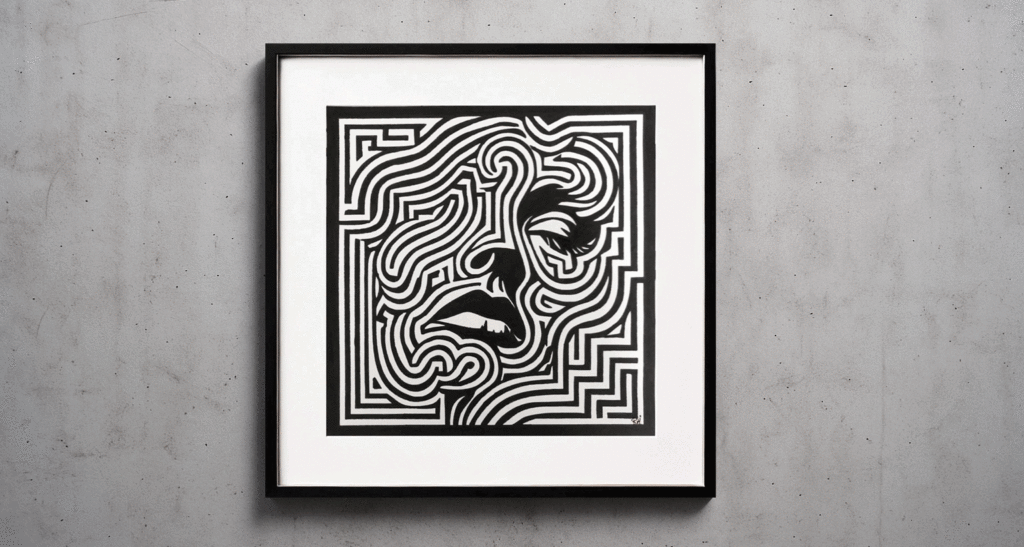
Roderick Hendrick
Roderick Hendrick conceives his images as systems: graphic rigor, internal balance, controlled tension.
He transforms the strict framework of ■ 30.5 ■ into a space of visual construction, where each series unfolds its own formal logic.
Whether exploring an invisible code (Dark Matter), a language reduced to its core (Pre-Syntax), or figures saturated with energy (Mini Pop), he composes a visual language that is dense, precise, and immediate.
A work of clarity and control, traversed by a continuous force—like a taut line that never breaks.
⚫⚫⚫
Where did the idea come from—that dark matter might be information rather than a substance?
I came across it while reading popular science articles. It’s not a proven theory, but it struck me: dark matter could be a structure of information—an invisible but active code that organizes matter and drives causality. It operates in the background, never directly visible, which ties into my interest in unseen logics that shape the real.
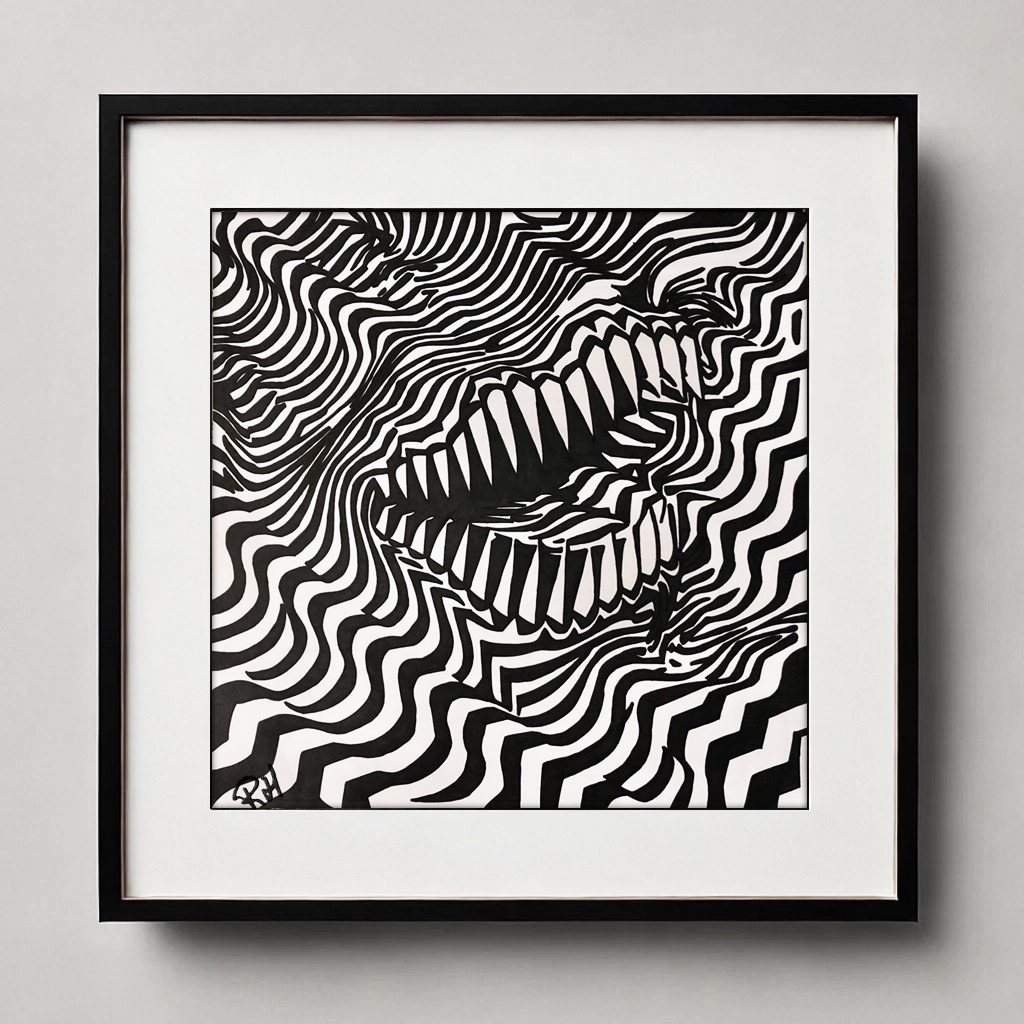
You don’t represent dark matter—you interpret it. How do you translate such an abstract idea into concrete forms?
I once saw a wildlife documentary. A crocodile was gliding slowly through the water, and what caught my attention wasn’t the reptile itself, but how its movement affected everything around it—the ripples, the curves, the density of the water. That, for me, became a metaphor for dark matter: something invisible that acts, transmits information, and conditions how everything else responds. What I draw are those logics—those silent forces.
Your work feels driven by a very exact graphic logic. Do you plan everything in advance, or is there still room for unpredictability in the process?
I define a base structure, but I allow space to adjust as I draw. I’m very focused on overall balance, so every change affects what comes next.
And how do you know when it’s finished?
When the balance feels right. Nothing more, nothing less..
S01 : //
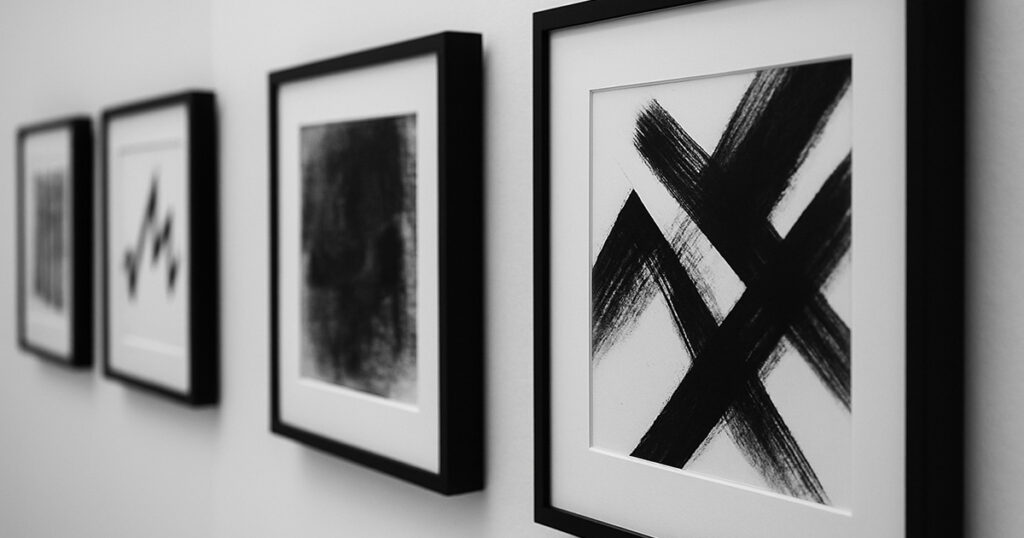
With //, Hendrick cuts out all narrative and keeps only the tension.
// targets what precedes structure.
How much space do you allow for mistakes or the unexpected?
Very little. I work with clear internal logics. If a piece doesn’t hold, I start over. If it really fails me, I destroy it. I’m not interested in integrating accident or approximation. There’s no spontaneity. It’s constructed. Either it works, or it doesn’t belong.
What do you want the viewer to feel?
Structure. That the image holds together because of something you can’t quite name.
You come from an architecture background. What did that discipline teach you that you carry into your art?
It taught me to think in systems—to organize elements with internal logic. To build structures, even if they’re invisible.
There are recurring patterns in your work. Do you follow a specific system?
My visual language evolves from one piece to the next. I don’t use a fixed grid, but each composition rests on a coherent structure, designed to hold visually.
S02 : Mini Pop
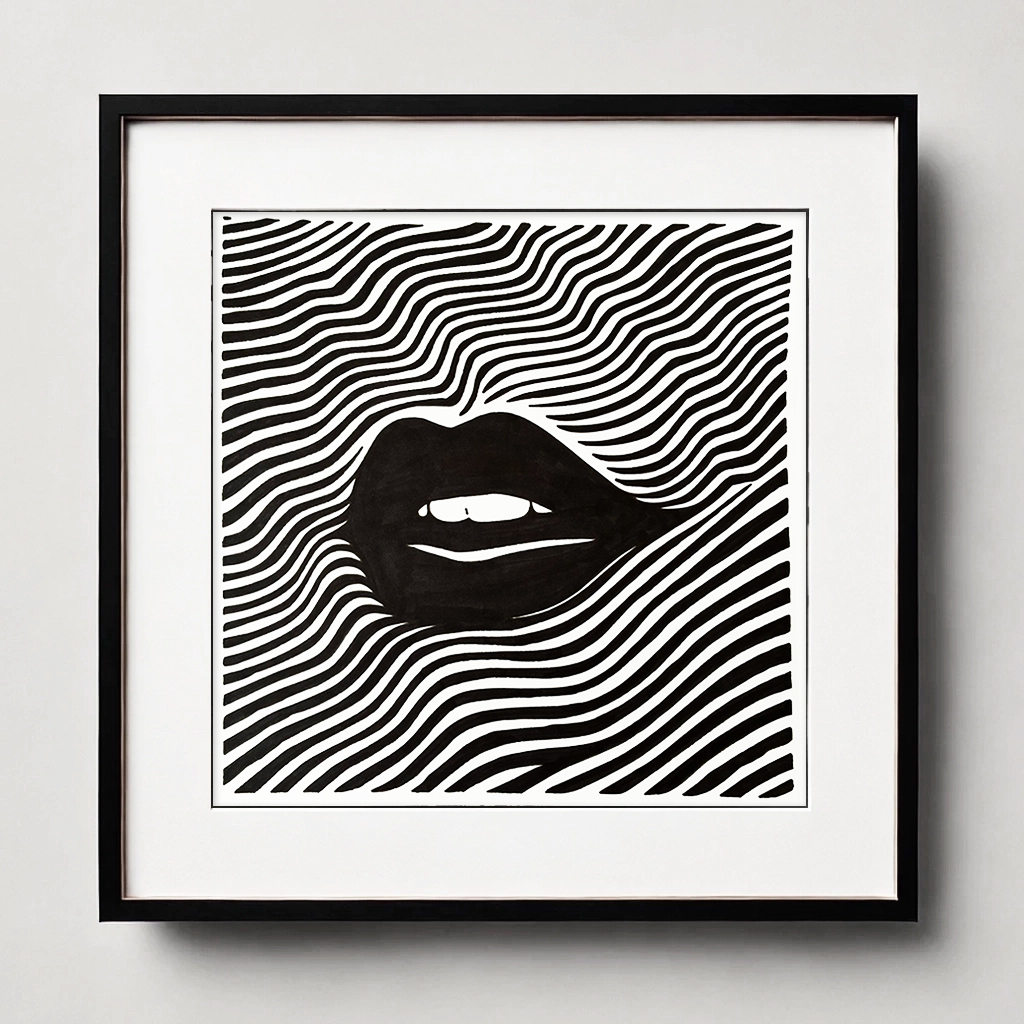
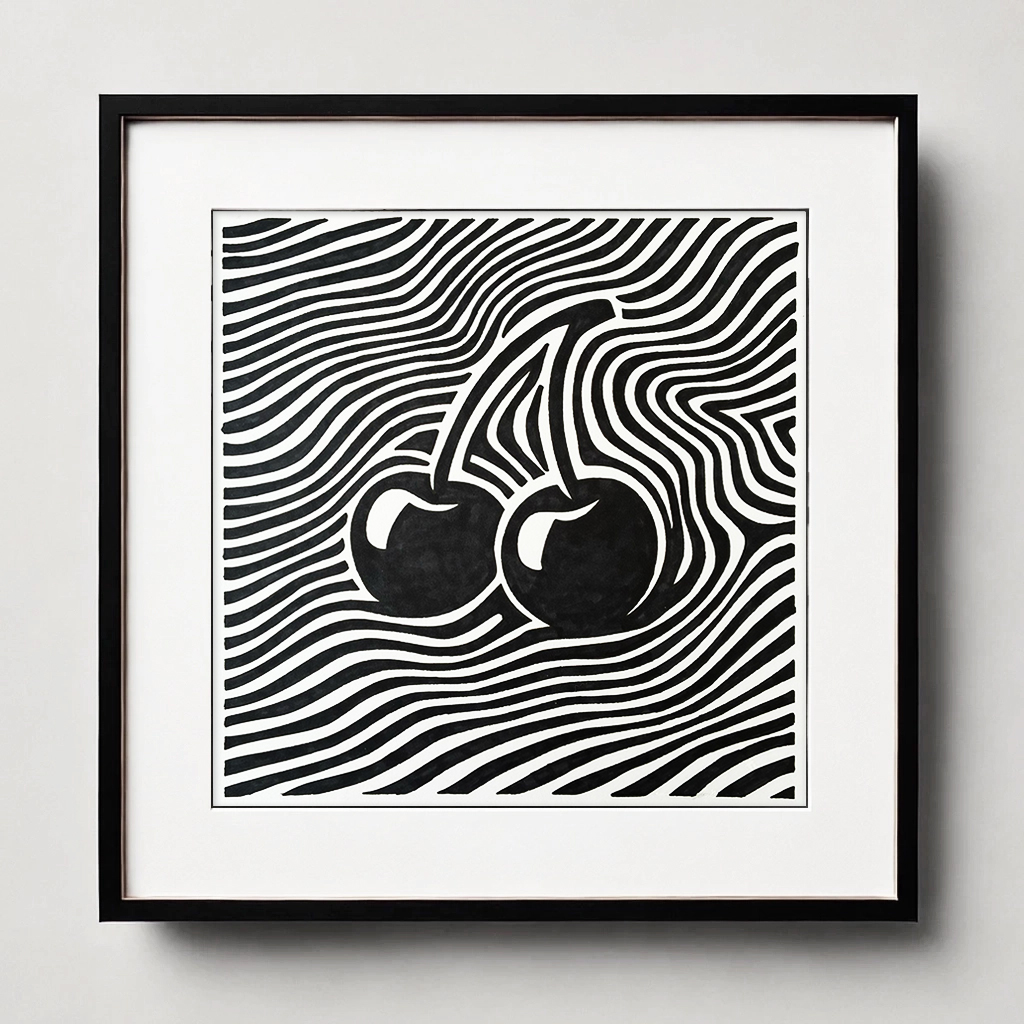
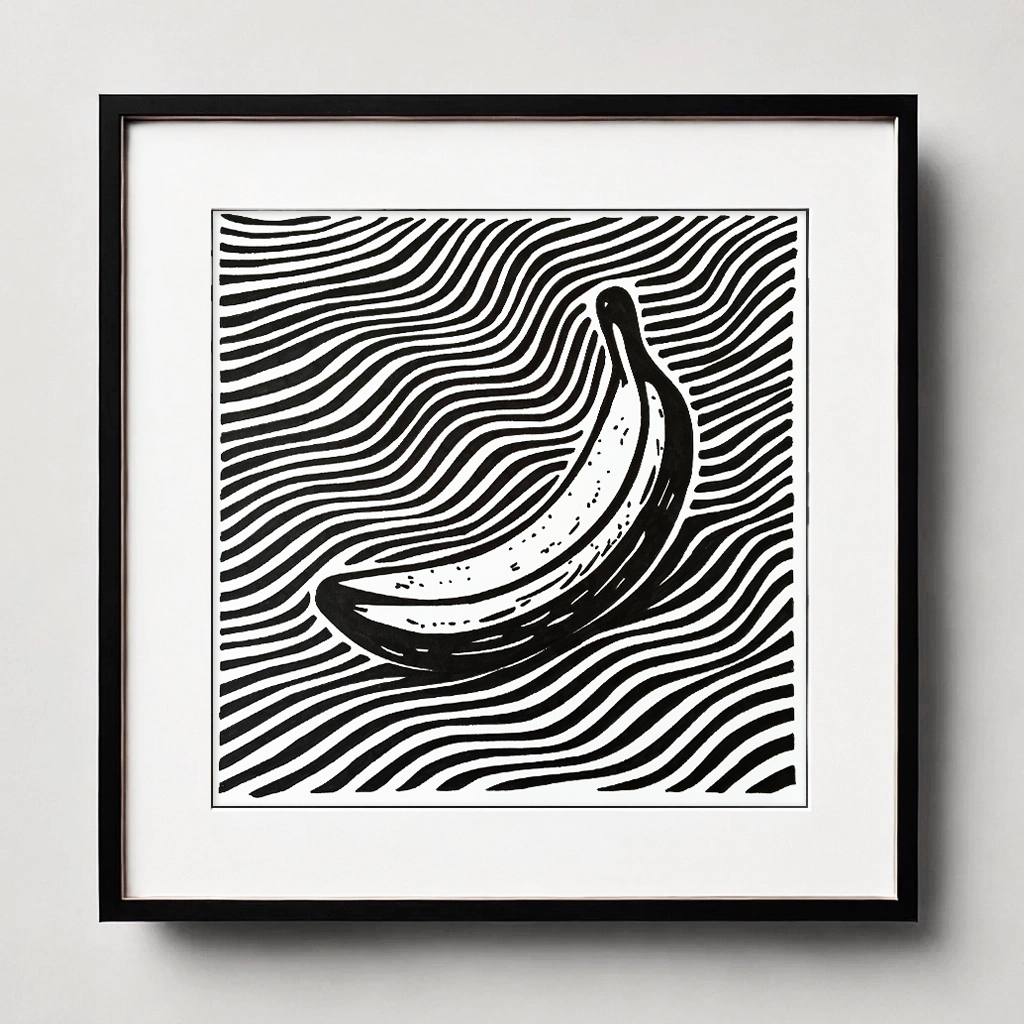
Mini Pop creates friction between a direct figure and a grid of graphic intensity. The eye oscillates between readable sign and pulsing structure, without hierarchy.
How do you choose the format or dimensions of a piece? Does it depend on the project, or is there a constant?
I work through ideas. As long as the idea feels alive, I develop it like a motif undergoing transformation. When it fades, I move on. And at that point, everything can shift: the format, the technique, the style—even the use of color. Nothing is fixed.
Do you ever return to earlier ideas?
Rarely. Only if it surprises me again—if it opens up something new. Otherwise, I leave it behind.
You always work alone. Do you ever seek outside input, or do you prefer staying within your own frame?
I work alone because I need focus. But I’m open to collaboration, as long as it’s clear and well-structured. Like a construction site: everyone works in their own space, but toward a shared goal.
Do you have a method for developing ideas, or do they come unexpectedly?
They come on their own. A form, an intuition, a certain angle. If it resonates, I follow it. I rarely force the process.
Do you see your work moving toward more complexity, more simplicity, or is that still undecided?
I don’t have a set direction. If an idea hits and needs a complex approach, I follow that. If it calls for something simple—even rough—I accept that too. I don’t have a fixed style or system. I adapt to what the idea demands, whatever shape it takes.
Three sources of inspiration?
Georges Rousse, Carl Finlow, and Marc-Antoine Mathieu.
S03 : Matière Noire (Dark Matter)
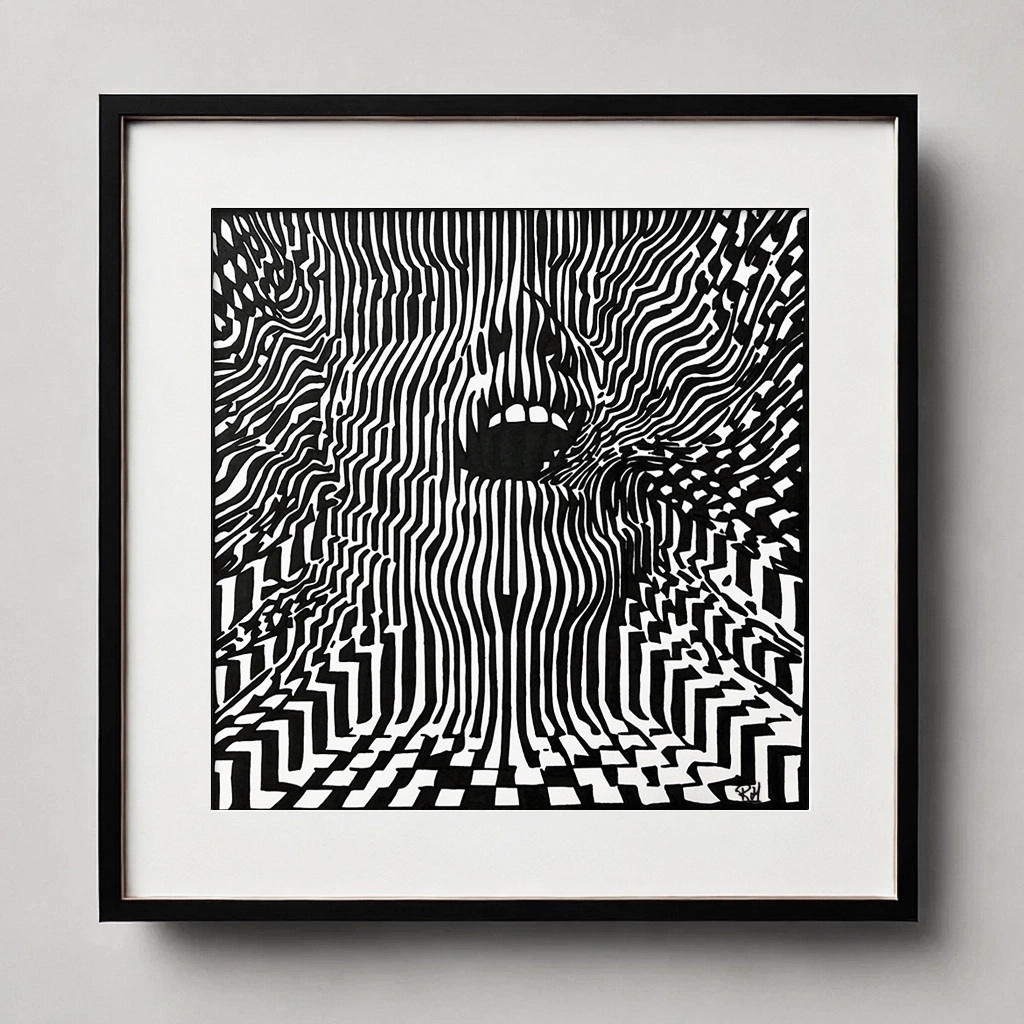
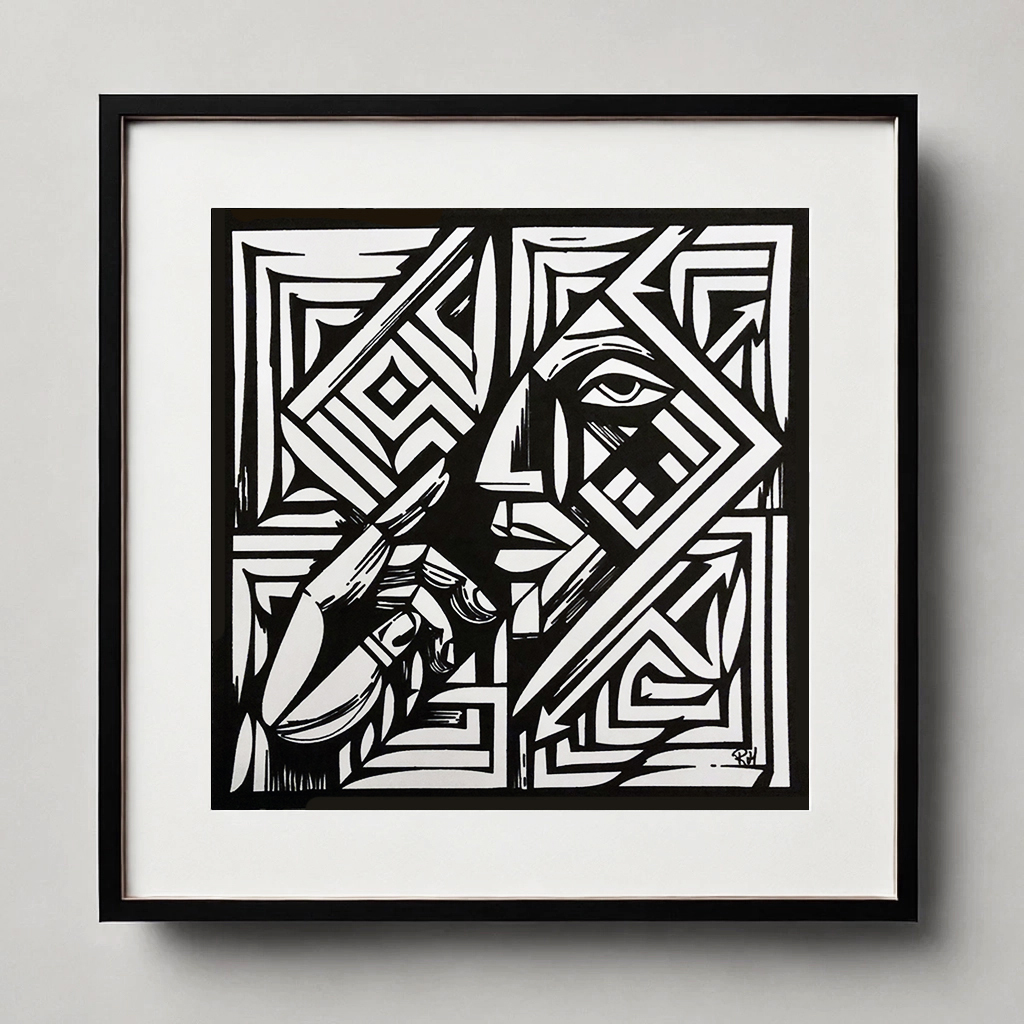
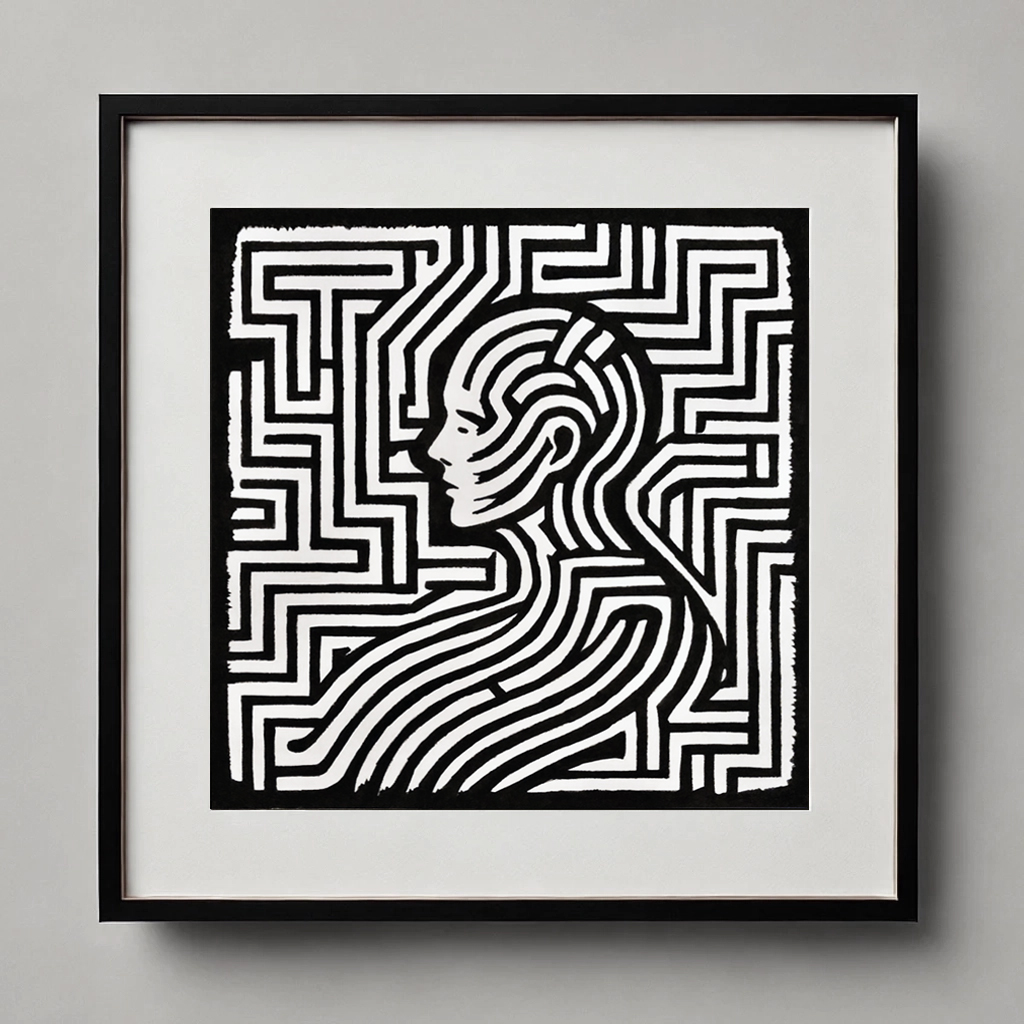
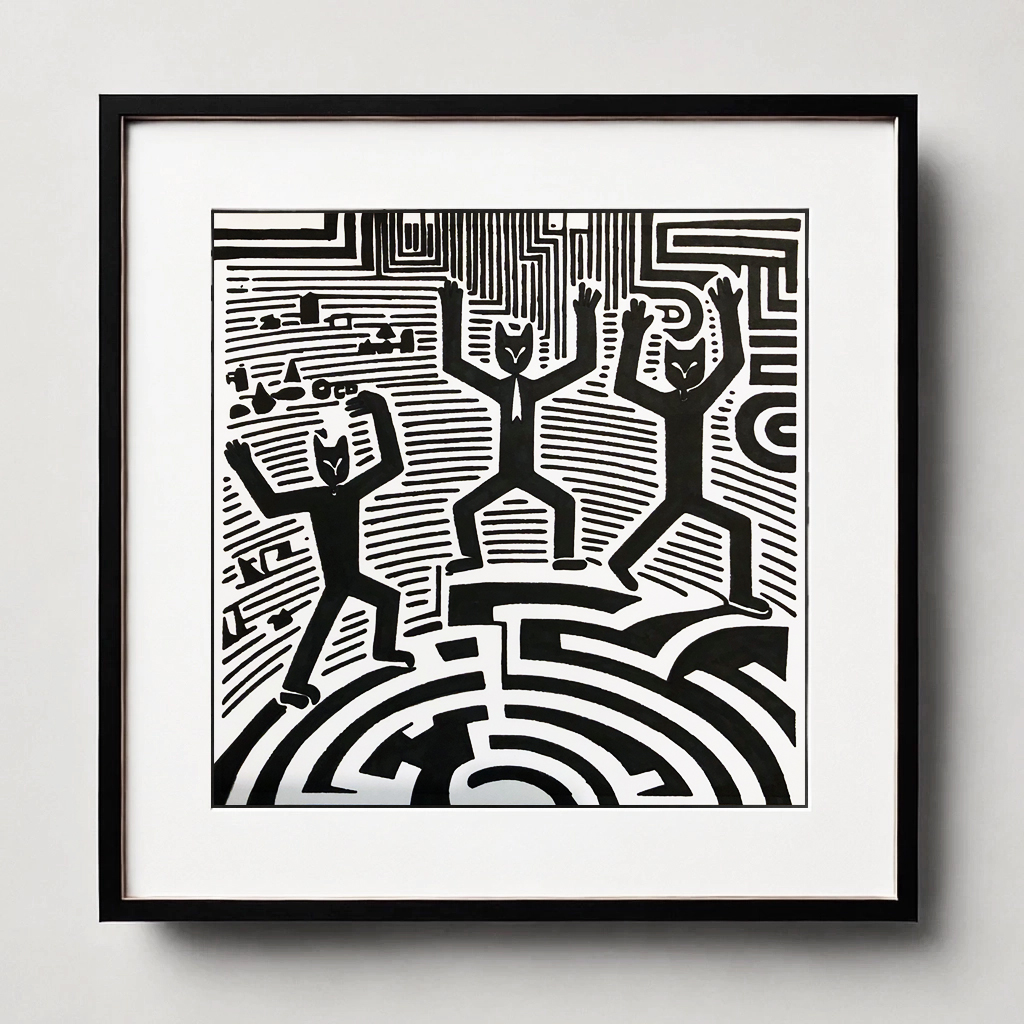
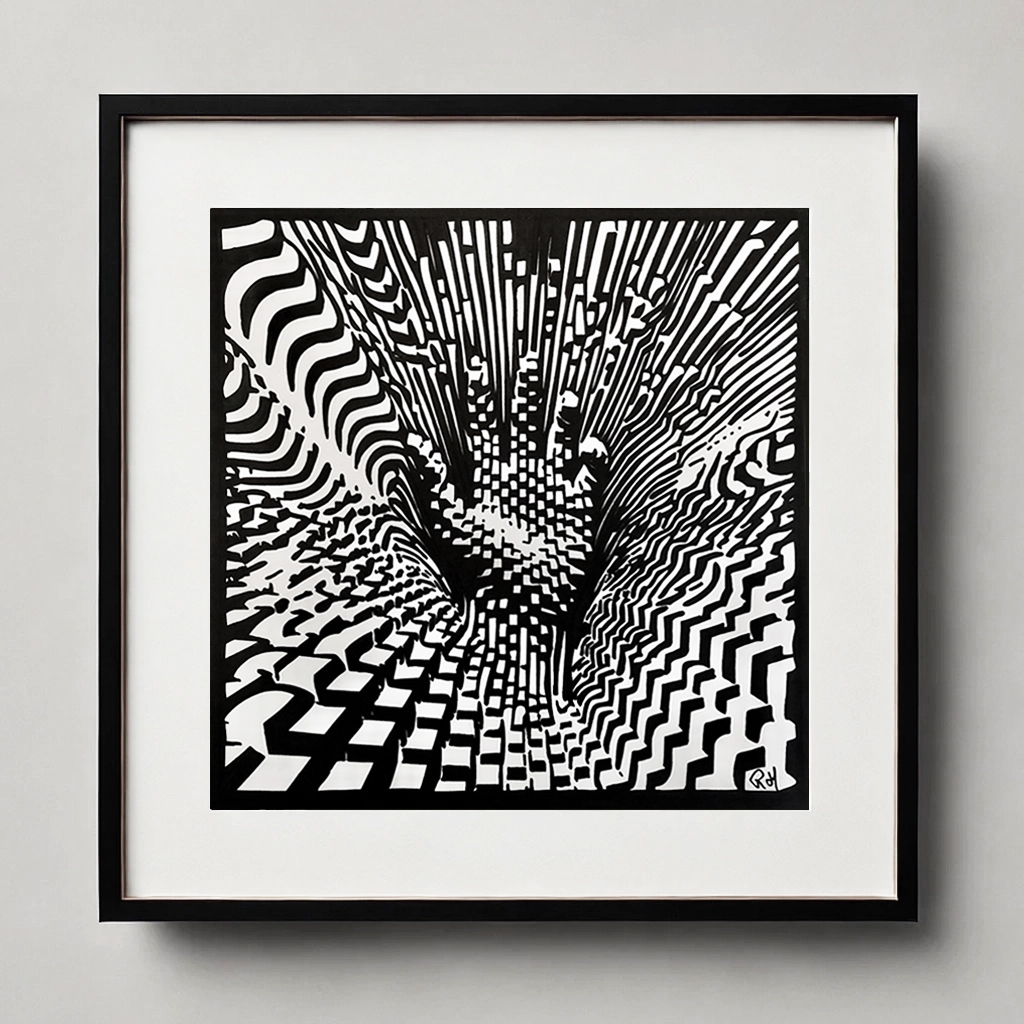
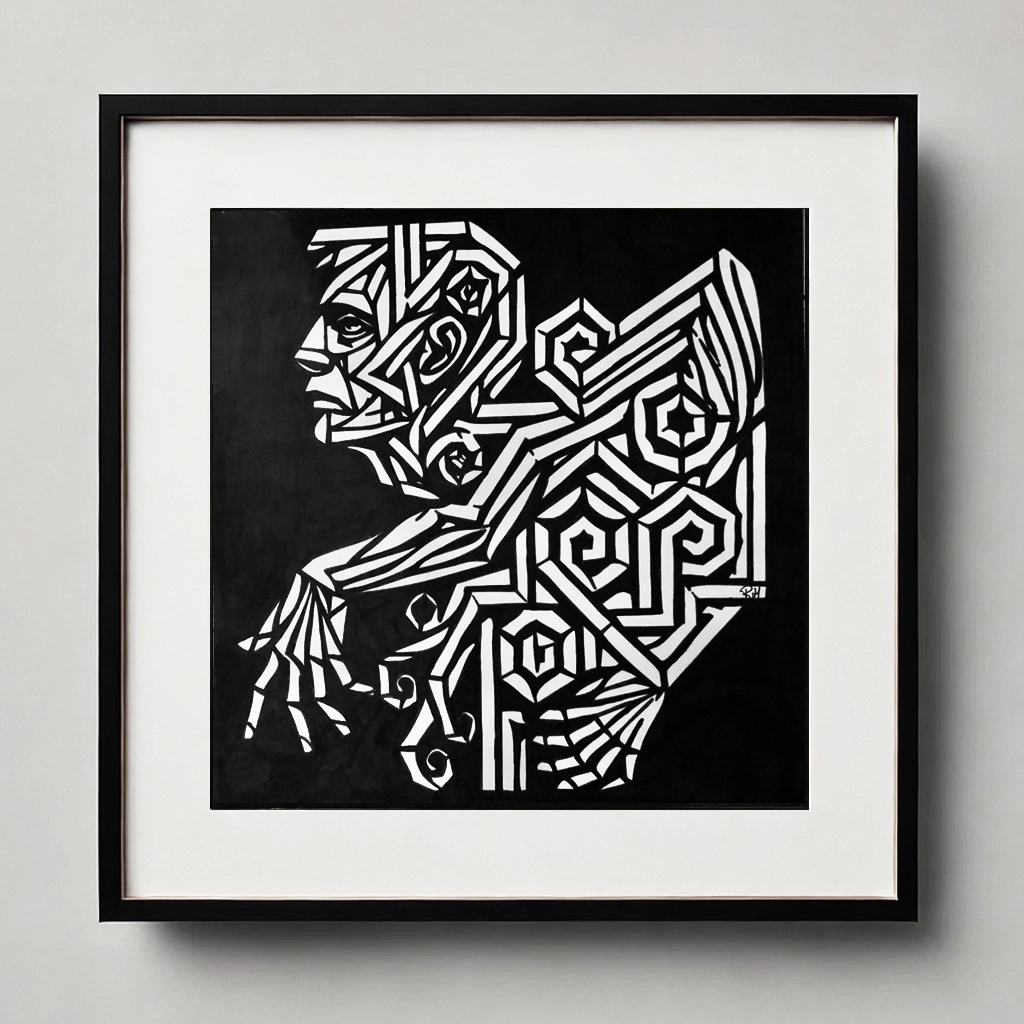
Matière Noire articulates tense structures guided by an invisible logic.
Roderick Hendrick draws a methodical abstraction, where each form responds to a coded tension.